Table of Contents
What Is Bookkeeping?
Why Bookkeeping Is Essential for Businesses
What Is Included in Bookkeeping Services?
Types of Bookkeeping Services
Business Bookkeeping Services
Bookkeeping Services for Small Business
Corporate Bookkeeping
Professional Bookkeeping Services vs. In-House Bookkeeping
Accounting and Bookkeeping Services – What’s the Difference?
Understanding Bookkeeping Rates
How to Choose the Right Bookkeeping Partner
Final Thoughts
What Is Bookkeeping?
Bookkeeping is the process of recording, organizing, and maintaining a company’s financial transactions. It involves tracking income, expenses, payroll, invoices, and other financial activities.
For businesses operating in the United States, bookkeeping ensures compliance with IRS requirements, supports tax preparation, and provides clear visibility into financial performance.
Why Bookkeeping Is Essential for Businesses
Bookkeeping directly impacts financial stability and growth.
Here’s why it matters:
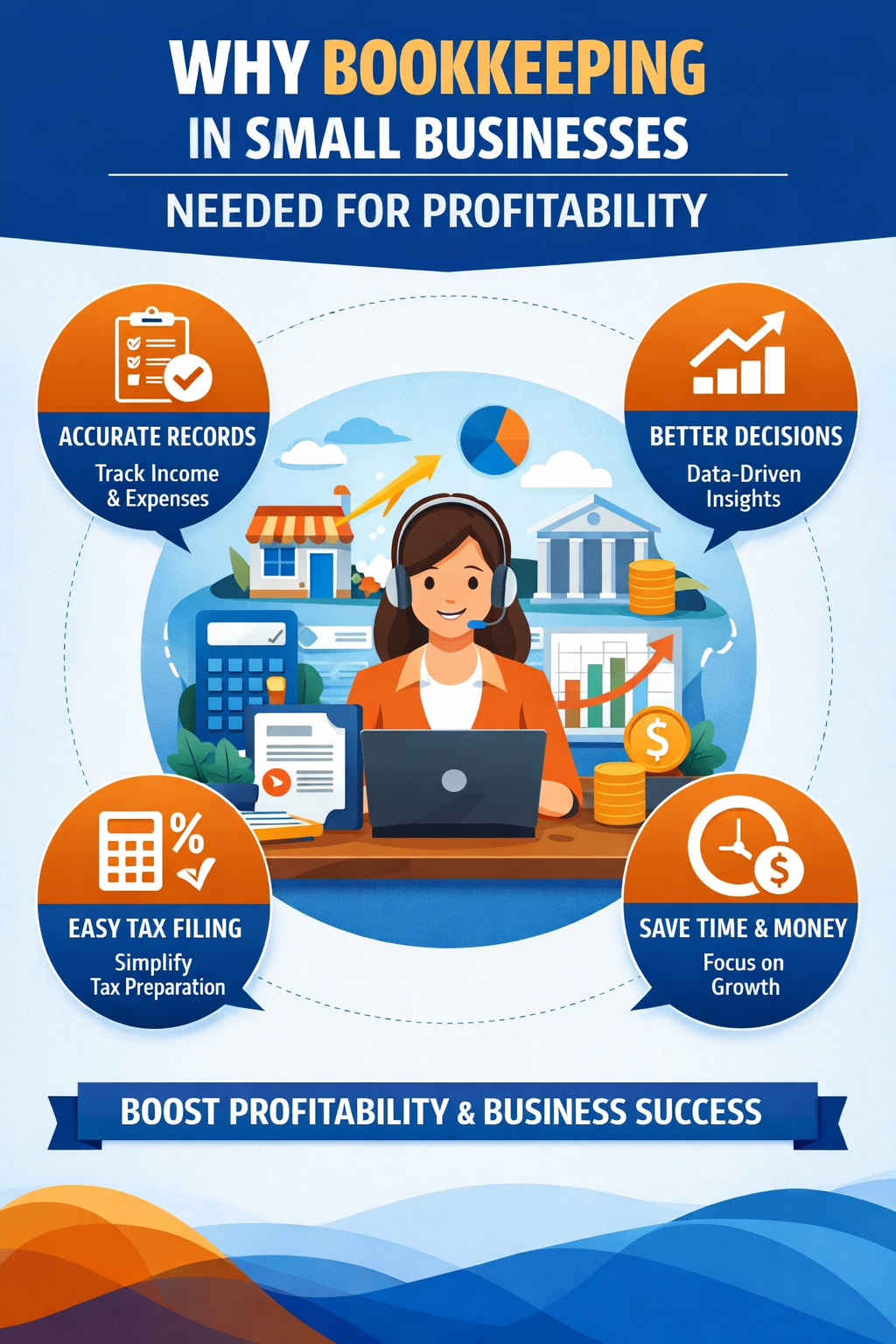
Maintains accurate financial records
Ensures federal and state tax compliance
Supports better financial decision-making
Improves cash flow visibility
Reduces the risk of penalties and errors
Prepares businesses for audits
Without structured bookkeeping, even profitable businesses can experience financial confusion.
What Is Included in Bookkeeping Services?
A common question business owners ask is: what is included in bookkeeping services?
Most professional bookkeeping services in the U.S. include:
Recording daily transactions
Bank and credit card reconciliation
Accounts payable and receivable management
Payroll support
Expense tracking and categorization
Monthly profit and loss reports
Balance sheet preparation
Cash flow reporting
Tax-ready documentation
These services help ensure financial accuracy and operational stability.
Types of Bookkeeping Services
Different businesses require different levels of bookkeeping support. The structure often depends on company size, transaction volume, and reporting complexity.
Business Bookkeeping Services
Business bookkeeping services are designed for growing companies that require consistent financial tracking and structured reporting.
They typically include:
Monthly reconciliations
Expense monitoring
Revenue tracking
Financial summary reports
Cash flow management
These services provide clarity and support business decision-making.
Bookkeeping Services for Small Business
Bookkeeping services small business owners rely on are usually flexible and cost-effective.
They help with:
Basic transaction tracking
Invoice management
Expense categorization
Sales tax tracking
Simple financial reporting
Outsourcing bookkeeping services for small business often reduces operational costs while maintaining compliance.
Corporate Bookkeeping

Corporate bookkeeping involves more complex financial structures and reporting systems.
It may include:
Multi-entity reporting
Internal financial controls
Compliance documentation
Budget monitoring
Audit preparation support
Larger organizations often integrate accounting and bookkeeping services for comprehensive financial oversight.
Professional Bookkeeping Services vs. In-House Bookkeeping
Businesses often choose between hiring in-house staff or outsourcing.
Outsourced professional bookkeeping services offer:
Reduced overhead costs
Access to experienced professionals
Scalable service options
Improved compliance oversight
Reduced risk of reporting errors
In-house bookkeeping may provide direct control but often comes with higher fixed expenses.
Accounting and Bookkeeping Services – What’s the Difference?
Bookkeeping and accounting are closely related but serve different functions.
Many businesses benefit from combining accounting and bookkeeping services for a complete financial management system.
Understanding Bookkeeping Rates
One of the most searched topics is bookkeeping rates.
In the United States, rates vary based on:
Business size
Monthly transaction volume
Payroll complexity
Industry-specific requirements
Reporting frequency
Common pricing models include:
Hourly billing
Fixed monthly packages
Customized corporate pricing
Small businesses typically prefer predictable monthly plans, while larger organizations may require tailored solutions.
How to Choose the Right Bookkeeping Partner
When selecting a bookkeeping provider, consider:
Experience with U.S. tax regulations
Industry knowledge
Software expertise
Data security standards
Transparent bookkeeping rates
Clear communication practices
Choosing the right partner ensures long-term financial clarity and compliance.
Final Thoughts
Bookkeeping is not just an administrative task — it is a strategic function that supports stability, compliance, and growth.
Whether a business needs basic bookkeeping services, structured business bookkeeping services, scalable bookkeeping services for small business, or advanced corporate bookkeeping, maintaining accurate financial records is essential for sustainable success.
Ready to Get Your Books in Order?
Schedule a free consultation with our certified bookkeepers. We'll review your current financials and create a custom plan to streamline your accounting.
Book Free Consultation →